
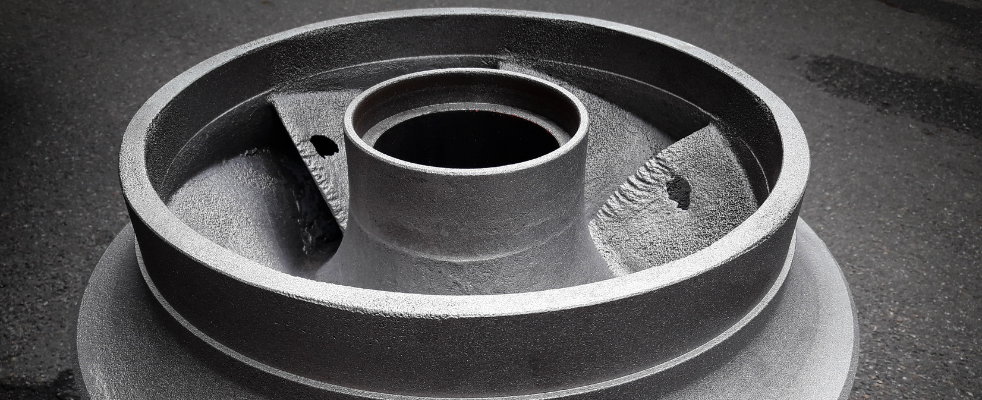
Pump cavitation is a common issue in fluid handling systems that can be costly and time-consuming to resolve. If cavitation isn’t managed properly, the damage can build up over time.
Most of the time, cavitation doesn’t start as a dramatic breakdown. Cavitation can start as a subtle vibration, or an intermittent noise that’s easy to overlook. When those subtle symptoms add up, it can cause damage to the impellers, failed seals, and additional maintenance to the pump.
While it is often associated with centrifugal pumps, cavitation is not limited to any single pump design. It can affect centrifugal pumps, positive displacement pumps, and specialty pumps alike whenever system conditions allow local pressure to fall below a liquid’s vapor pressure.
Let’s begin by understanding what pump cavitation is. This section will answer why it occurs, and how to diagnose it early. Then, we'll discuss cavitation prevention.
What is Pump Cavitation?
Pump cavitation can occur when the pressure of a liquid drops below its vapor pressure inside the pump. When this happens, it can cause vapor bubbles to form. As the fluid continues moving through the pump and pressure recovers, those vapor bubbles collapse violently.
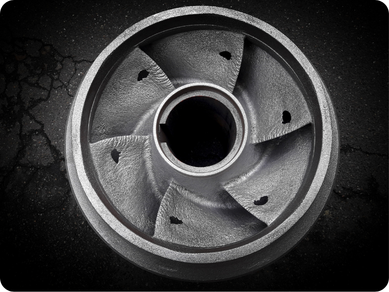
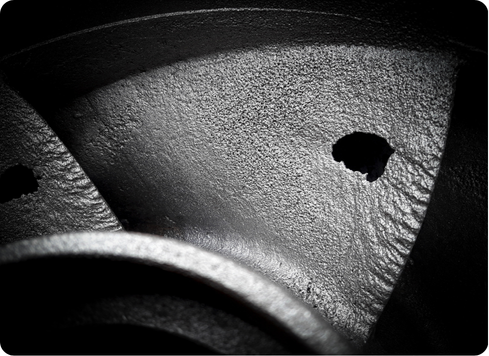
Each collapse, or implosion, releases a small but intense pressure wave. When this happens repeatedly near metal surfaces, such as the impeller or casing, it causes pitting, erosion, vibration, and noise. Over time, these micro-impacts degrade pump performance and structural integrity.
Pressure, Tempature, and Vapor Pressure
Every liquid has a vapor pressure that increases with temperature. When system pressure falls below this vapor pressure, the liquid flashes into vapor. All of the below factors can increase the cavitation risk:
-
High temperatures
-
Low inlet pressures
-
Excessive suction losses
The Role of NPSH
Net Positive Suction Head (NPSH) is central to understanding cavitation.
-
NPSH Available (NPSHa): The actual pressure head available at the pump suction, based on system conditions.
-
NPSH Required (NPSHr): The minimum pressure head the pump needs to operate without cavitating, as determined by the manufacturer.
Cavitation occurs when NPSHa is less than NPSHr, even if the pump appears properly sized for flow and head.
Where Cavitation Occurs
Cavitation occurs in different locations depending on pump design:
-
In centrifugal pumps cavitation can occur in the impeller eye, vane leading edges, and pump casing near low-pressure zones
-
In positive displacement pumps (gear, screw, vane) cavitation can occur in the inlet cavities, between gear teeth, screw roots, or sliding surfaces
-
In reciprocating pumps cavitation can occur in the inlet valves, acceleration zones during the suction stroke
Regardless of pump type, cavitation always originates where pressure is lowest and fluid acceleration is highest.
Variants of Pump Cavitation
Cavitation doesn’t always present the same way. Understanding the different types helps identify the underlying cause.
Suction Cavitation
This is the most common form and occurs when insufficient pressure exists at the pump inlet. The causes of suction cavitation include:
-
Excessive suction lift
-
Undersized piping
-
Clogged strainers
-
High fluid temperature
Discharge Cavitation
Discharge cavitation happens when the pump operates at very low flow rates, often due to throttling on the discharge side. Internal recirculation creates localized low-pressure zones that trigger bubble formation.
Inlet Restriction / Vaporous Cavitation
Blockages or restrictions upstream, such as partially closed valves or fouled filters, reduce inlet pressure enough to cause vapor formation.
Turbulent or Vortex Cavitation
Poor suction piping layout can introduce turbulence or vortices that locally reduce pressure, even when overall NPSHa appears adequate.
Special Cases
Certain applications introduce additional complexity. These applications are rare but should still be considered:
-
Non-Newtonian fluids, meaning liquids whose viscosity changes when force is applied, may behave unpredictably under stress.
-
Dissolved gases can come out of solution under pressure changes, mimicking cavitation.
-
Multicomponent fluids may vaporize unevenly, complicating diagnosis.
Causes of Pump Cavitation
Most pump cavitation causes stem from system-level conditions rather than pump defects alone.
System Design Factors
-
Excessive suction piping length or elevation
-
Undersized suction lines
-
Too many fittings or sharp bends near the inlet
-
Poor inlet flow conditions or trapped air pockets
These factors increase friction losses and reduce available inlet pressure.
Pump Selection and Configuration
-
Pump speed is too high for inlet conditions
-
Pump operating far from its intended duty range
-
Internal clearances or geometries sensitive to inlet pressure
-
Materials not suited for erosive conditions
Fluid Properties
-
High operating temperature
-
High vapor pressure
-
Entrained air or dissolved gases
-
Solids content or elevated viscosity
Operational Practices
-
Running pumps outside recommended flow ranges
-
Rapid startups or shutdowns
-
Excessive throttling or frequent cycling
-
Deferred maintenance allowing minor issues to escalate
Cavitation is often the result of multiple contributing factors rather than a single root cause.
See How Our Experts Can Help with Cavitation Prevention
How to Diagnose Cavitation Early
Early detection limits damage and prevents costly downtime.
Monitoring and Instrumentation
-
Vibration monitoring: Cavitation produces distinctive high-frequency vibration signatures
-
Acoustic monitoring: Ultrasonic sensors can detect bubble collapse before audible noise appears
-
Performance trend: Declines in flow, pressure, or efficiency often precede visible damage
Modeling and Testing
Hydraulic modeling, system simulations, or computational fluid dynamics (CFD) can identify cavitation-prone regions during design or modification phases. Performance testing during commissioning helps validate real-world conditions.
Inspection Strategies
-
Routine visual inspection of wear components
-
Scheduled disassembly based on service severity
-
Comparing erosion patterns to operating data
Cavitation damage often appears as pitting or surface fatigue rather than uniform wear.
How to Stop a Pump from Cavitating
Stopping cavitation requires aligning system design, pump selection, and operating practices.
Installation and System Setup Considerations
-
Verify available inlet pressure under real operating conditions
-
Minimize suction-side losses through proper pipe sizing and routing
-
Ensure adequate straight-run piping at the pump inlet
-
Confirm elevation, static head, and flooded suction assumptions match field conditions
-
Check for air leaks, improper gaskets, or fittings that may introduce vapor pockets
Even when a system cannot be fully redesigned, installation details often determine whether cavitation becomes a persistent problem or a manageable risk.
Operational Changes
-
Reduce pump speed where feasible
-
Avoid sudden flow or pressure changes
-
Control fluid temperature
-
Eliminate air leaks and vapor pockets
These steps are often the most practical way to address cavitation in existing systems.
Materials and Component Selection
-
Use wear-resistant alloys or coatings
-
Choose components designed for demanding inlet conditions
-
Reinforce areas exposed to repeated pressure fluctuations
System Upgrades
-
Install inducers or inlet boosters
-
Add charge pumps for difficult suction conditions
-
Use variable speed drives to match demand and reduce inlet stress
Maintenance Practices
-
Address minor erosion early
-
Replace damaged components before imbalance develops
-
Track recurring cavitation events to identify systemic issues
Together, these strategies outline how to prevent a pump from cavitating applicable to a range of pump types.
Trade-Offs, Practical Constraints, and Cost Considerations
Eliminating cavitation entirely is not always practical or economical. In a lot of cases, mild or controlled cavitation may actually be acceptable if the damage progression is predictable and manageable.
The challenge lies in balancing your:
-
Energy efficiency
-
Upfront capital investment
-
Long-term maintenance and reliability
In many cases, improving inlet conditions or material selection yields lower lifecycle costs, even if initial expenses increase. The objective is not perfection, but consistent, reliable operation.
See How Our Experts Can Help with Cavitation Prevention
DISCLAIMER: The content on this blog is provided on an “as is” and “as available” basis for general informational and educational purposes only. It does not constitute professional advice of any kind, including, but not limited to, technical advice. The author makes no representations or warranties, express or implied, regarding the completeness, accuracy, reliability, suitability, or availability of any information, products, or services referenced in this blog for any purpose.