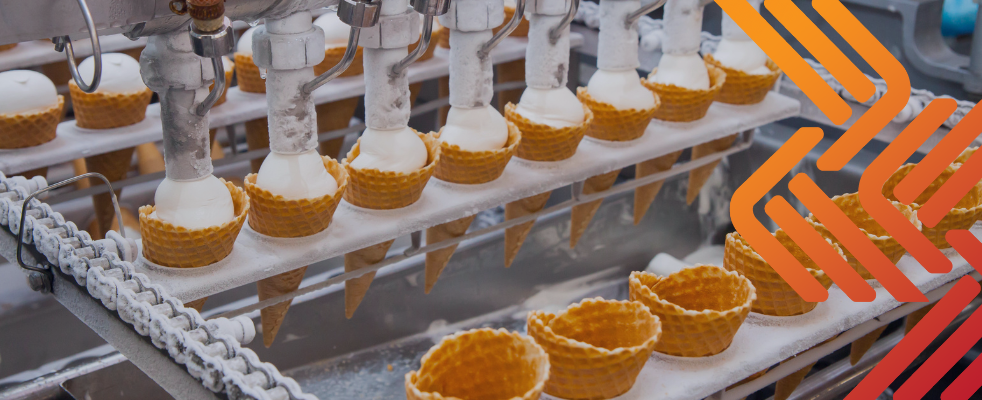
Because of strict safety standards and the need to preserve product quality, specialized pumps are used at nearly every stage of food and beverage production, from mixing and blending to filling and packaging.
In this article, we’re going to take an exhaustive look at the types of pumps used in the food and beverage industry. We’ll cover how each works, why it’s valuable, and which pumps are best suited for specific product categories. At FCX Performance, we are pump experts, and our goal is to give you a clear understanding of how the right pump choice directly influences your operation’s food safety, cost efficiency, and production success.
Sanitary and Hygienic Pumps
The Job of Sanitary and Hygienic Pumps
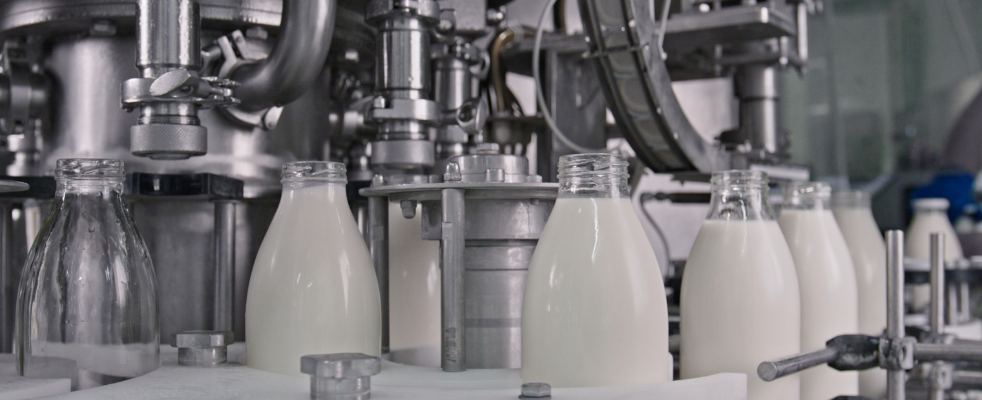
Sanitary pumps are specifically designed to meet stringent hygiene requirements. They move liquids such as milk, juice, and syrups without contaminating them, thanks to their smooth surfaces and easy-to-clean components. The stainless steel used in sanitary pumps is typically grade 316ss with 32Ra or better finishes.
Benefits of Sanitary and Hygienic Pumps in Food and Beverage
-
Compliance with regulations: Designed to meet FDA, EHEDG, or 3A standards.
-
Reduced contamination risk: Their stainless steel construction prevents bacteria buildup.
-
Cost efficiency: These types of pumps are easy to disassemble, reducing downtime when you need to clean them.
-
Product integrity: Their gentle handling preserves texture and taste.
Sanitary Blender Pumps
The Job of Sanitary Blender Pumps
A sanitary blender pump might not be that well-known to some, but they play an important part in blended liquid production. This type of pump is typically a shear pump or a hybrid between a centrifugal pump and a blender.
These pumps are used when ingredients need to be mixed while being transferred. In beverage plants, for instance, blender pumps allow syrup and water to be combined seamlessly before carbonation.
Benefits of Sanitary Blender Pumps in Food and Beverage
-
Consistency: Manufacturers can achieve uniform blends for juices, flavored waters, and sauces.
-
Hygiene-friendly: They can meet strict sanitary standards while mixing.
-
Efficiency from combining fluids: Reduce the need for separate mixing steps.
Centrifugal Sanitary End Suction Pumps
The Job of Centrifugal Pumps
Sanitary end centrifugal suction pumps are designed specifically for hygienic applications with smooth surfaces, clean-in-place (CIP) compatibility, and FDA/3A compliance. Therefore, it’s no surprise they’re integral to beverage production, in particular.
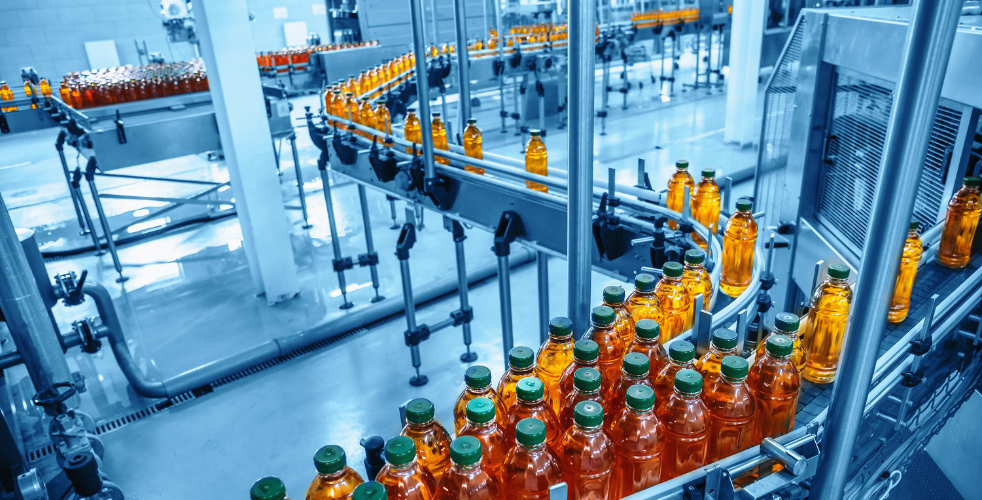
These pumps use an impeller to move fluids. This makes them ideal for low-viscosity products like beer, wine, water, and clear juices.
Benefits of Centrifugal Sanitary End Suction Pumps in Beverage Production
-
Ideal for: Low-viscosity production of fluids such as water, beer, and wine.
-
High flow rates: Efficiently transfer large volumes.
-
Energy savings: Simple design keeps operating costs low.
-
Versatility: Can handle both hot and cold fluids.

Twin Screw Pumps
The Job of Twin Screw Pumps
Twin screw pumps handle both liquids and viscous materials, even with particles like fruit chunks or soft solids. They’re used in sauces, yogurt with fruit pieces, and baby food.
Benefits of Twin Screw Pumps in Food and Beverage
-
Gentle handling: Maintain product structure without shearing.
-
Versatile: Switch between cleaning and production without changing pumps.
-
Low pulsation: Ensures smooth product flow.
Rotary Pumps
The Job of Rotary Pumps
Rotary pumps move fluids using rotating gears or lobes, making them excellent pump options for viscous substances like honey, chocolate, or peanut butter.
Benefits of Rotary Pumps in Food and Beverage
-
Precision: Accurate dosing and portioning.
-
Hygienic design: Easy cleaning options make them ideal for super-hygienic environments
-
Durability: Handle thick and sticky products without strain.
Steam Condensate Pumps
The Job of Steam Condensate Pumps
These pumps return condensed steam to boilers or other heating systems, critical in facilities where steam is used for cooking, sterilization, or cleaning. They can be very effective in controlling a heated environment when combined with safety relief valves, which we discuss in our post on commonly used valves in the food and beverage industry.
Benefits of Steam Condensate Pumps in Food and Beverage
-
Energy recovery: These pumps reuse condensate for improved efficiency.
-
Temperature control: Stable heating processes improve product consistency.
-
Sustainability: Because they deal in steam, they are great environmentally friendly options as they reduce water and energy waste.
Vacuum Pumps
The Job of Vacuum Pumps
Vacuum pumps remove air and gases, often used in packaging or concentration processes.
Benefits in Food and Beverage
-
Improved shelf life: Vacuum sealing reduces oxidation.
-
Enhanced product quality: Used in freeze drying coffee, fruits, or herbs.
-
Process efficiency: Enable deaeration, a process used to dissolve corrosive gases from water streams
-
Ideal for usage in: production of juices and sauces.
Sealless Mag Drive Pumps
The Job of Sealless Mag Drive Pumps
These pumps use magnetic coupling instead of seals, reducing the risk of leakage. They are ideal for corrosive or hazardous ingredients like flavor concentrates or cleaning chemicals.
Benefits of Sealless Mag Drive Pumps in Food and Beverage
-
Leak-free operation: Protects both workers and products.
-
Low maintenance: No mechanical seals to replace.
-
Enhanced safety: Ideal for allergen or chemical handling.
Self-Priming Pumps
The Job of Self-Priming Pumps
Self-priming pumps draw liquid into themselves without manual priming, making them suitable for washdown systems or transfer of water and cleaning fluids.
Benefits of Self-Priming Pumps in Food and Beverage
-
Operational ease: No need for constant supervision.
-
Reduced downtime: Quick restart after cleaning cycles.
-
Durability: They can handle varying liquid levels.
Which Pumps Work with Certain Food Products?
We know it’s a big industry! So, below, we’ve outlined the types of pumps most commonly used by the specific sub-industry of food and beverage production.
Baked Goods
-
Rotary pumps for chocolate, fillings, and frosting.
-
Self-priming pumps for cleaning and CIP systems.
Beverages
-
Centrifugal pumps for juice, beer, and wine.
-
Blender pumps for flavored drinks.
-
Vacuum pumps for carbonation and deaeration.
Confectionery
-
Rotary pumps for honey, caramel, and chocolate.
-
Vacuum pumps for sugar concentration and candy making.
Dairy
-
Sanitary centrifugal pumps for milk transfer.
-
Twin screw pumps for yogurt with fruit inclusions.
-
Rotary pumps for cream or cheese curds.
Meat and Poultry Processing
-
Twin screw pumps for minced meat or pastes.
-
Vacuum pumps in packaging lines.
-
Steam condensate pumps for cooking and sterilization.
Sauces and Condiments
-
Rotary pumps for ketchup, mayonnaise, and mustard.
-
Twin screw pumps for chunky salsas and dips.
-
Mag drive pumps for flavor concentrates or oils.
Key Business Considerations When Choosing a Pump
It’s important to understand which types of pumps can help you increase efficiency, but also which types are going to be up to the rigorous standards set by the food and beverage industry. We hope this detailed look at the different types of pumps has given you some insight into which is best for you.
We take great pride in our expertise within the food and beverage industry. Whether it’s designing entire flow control systems for food and beverage plants or creating solutions for a troublesome product, please don’t hesitate to contact one of your local representatives today.